
Occasional observations on the wildflowers of 91011.
As we know all too well, when wildfires cross the line into neighborhoods, the results are usually terrifying — and sometimes searingly tragic, as the recent Eaton Fire demonstrated once again. But wildfire has also always been a part of the larger life cycle of California’s wild landscape. Many native plants have adapted to wildfire in remarkable ways. Indeed, some flowers rarely appear at all, except after a wildfire, and then they may erupt in vast numbers. These species are known as pyrophytes or “fire-followers.”
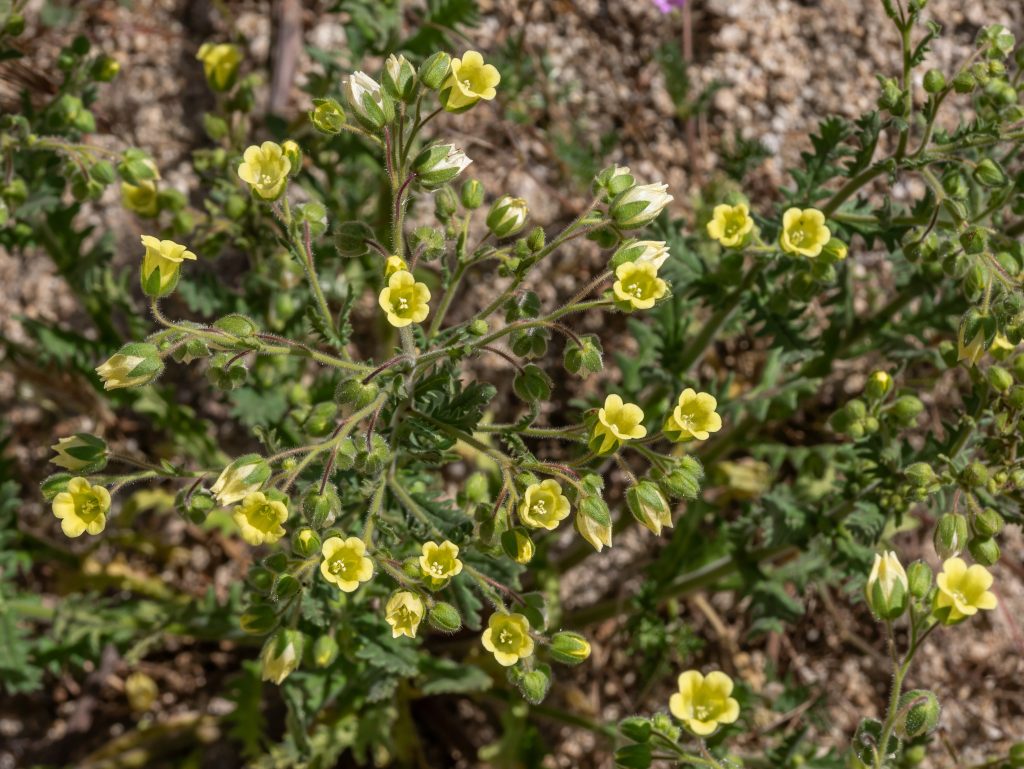
One of the many fire-followers in our hills, Whispering Bells (Emmenanthe penduliflora) is a small herbaceous plant that is surprisingly adept at blooming. If you time it right, you’ll find it gracefully decked with petite creamy-yellow bells. These bells really do whisper, but only when the flowers and stems have dried, still fully intact and looking like the original plant — but now in tones of sepia. Sadly, Whispering Bells is fairly rare around here. Occasionally it appears on the upper Open Space Trail but, alas, it’s never seen at Cherry Canyon.
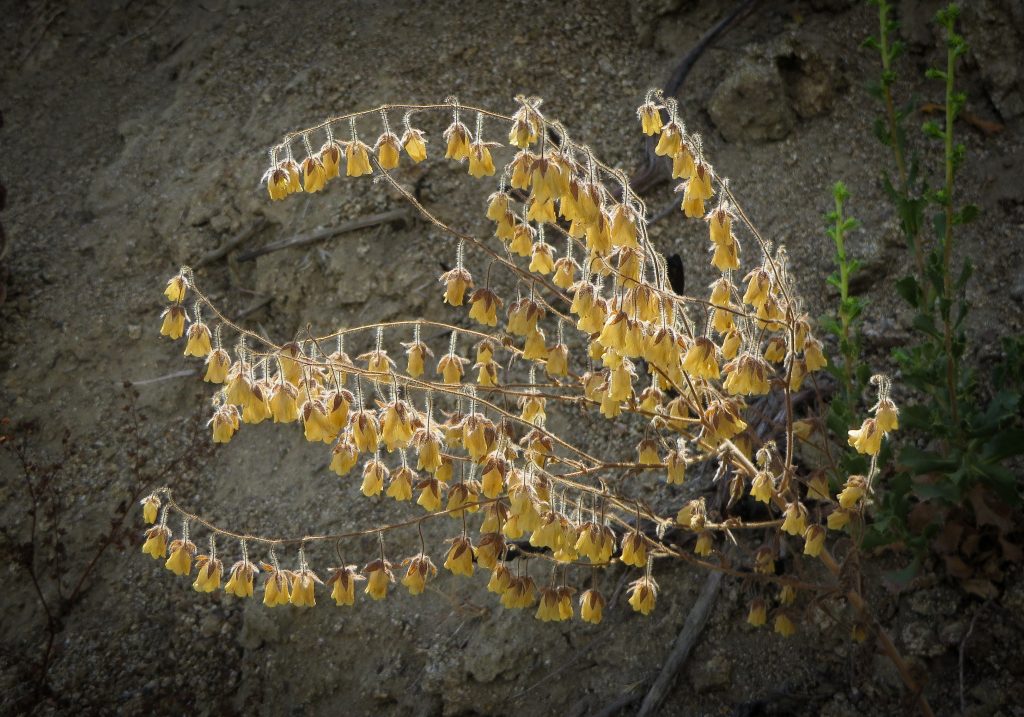
Or so I thought. Until, four months after the Eaton Fire, ten or more Whispering Bells suddenly appeared along the Descanso Fire Road and along the Friendship Path. Seriously, that made no sense! The Eaton Fire had stopped four miles away on Brown Mtn., between Millard Canyon and El Prieto Creek. Cherry Canyon was far removed from the burning hillsides and scorched earth — so why did this fire-follower awaken?

Best guess? The flames of the Eaton Fire spared the city of La Cañada, but plenty of secondhand smoke and ash drifted across our parks and neighborhoods during that awful January week in 2025. These traces of char and combustion settled on roofs and lawns, and they surely filtered also into the soil — awakening the dormant seeds of Whispering Bells. A sign of hope? Sure, it may be trite, but even as we wrestled with our own family’s losses from that fire, we also saw this unexpected arrival of beauty as a hopeful sign in the wake of this catastrophe. And because the residue of fire, smoke, and ash can linger for a few years after wildfires, there’s a decent chance that Cherry Canyon will display more Whispering Bells — and, perhaps, more invitations to hope — in the years to come.
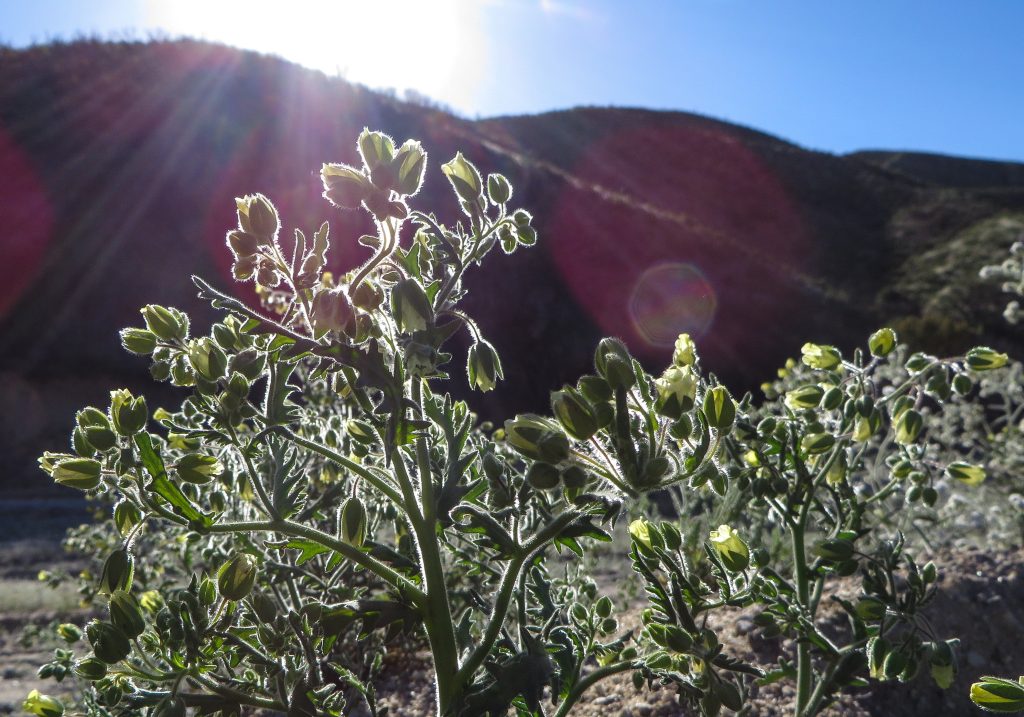
Where and when to find it. Whispering Bells blooms from February into June, mostly in the hills and mountains of many of California’s coastal counties, but the Sierra foothills and our deserts also have a smattering of records. Locally, look for it in April or May along the upper Open Space Trail or along the Descanso Fire Road and the Friendship Path.
- For more about Whispering Bells, visit Wikipedia.
- For info about growing Emmenanthe penduliflora in your yard, visit Calscape.org.
- For distribution maps, taxonomy, and more photos, visit Calflora.org.
- You can also read other wildflower notes, or check out the LCF wildflower directory.
