
Occasional observations on the wildflowers of 91011.
“Leaves of three, let it be!” Six pithy words of advice that have probably saved many a youngster — indeed, many an oldster! — from messing with poison oak and from two or three weeks of itchy, blistering rash. But can we agree that as advice goes, this maxim is not very precise? I mean, there are other native plants that fit the “leaves of three” description. Clematis is one. So is the tasty blackcap raspberry occasionally found in the San Gabriels.

But we instinctively invoke a second maxim: “Better safe than sorry!” Fair enough. But there’s no reason to be afraid of this local lookalike: Fragrant Sumac (Rhus aromatica, formerly R. trilobata). Does it have leaves of three? You betcha. Is it likely to give you a rash? Probably not, unless you have some unexpected special sensitivity.
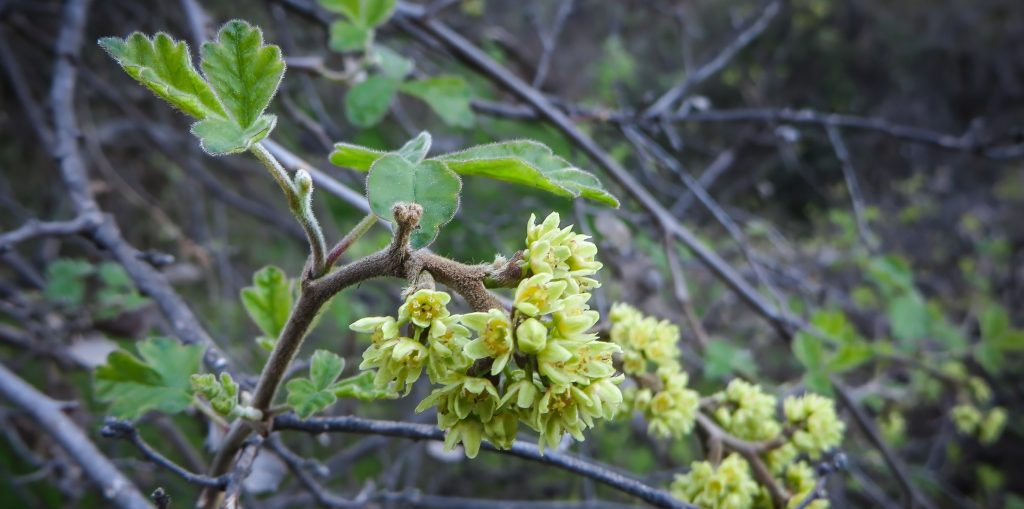
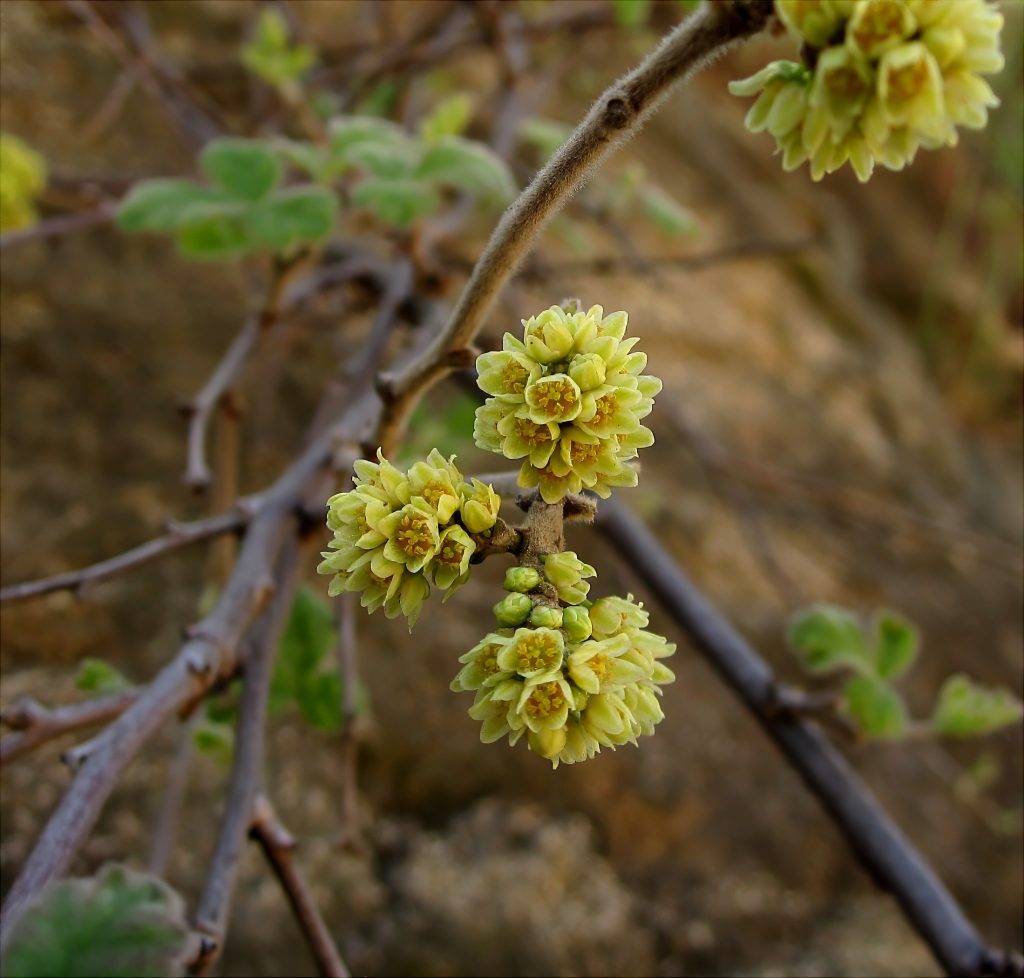
Fragrant Sumac is in the sumac family — no surprise there! — as is Poison Oak, along with three other common native shrubs you will surely see in bloom at Cherry Canyon or in our nearby hills: Laurel Sumac, Sugar Bush, and Lemonade Berry. Of those three, only Fragrant Sumac has branches that end in leaves of three, but the resemblance with Poison Oak ends there. The leaves of Fragrant Sumac are generally smaller, and its flowers are more robust: clusters of creamy yellow blossoms that have a reputation for a pungent fragrance — hence this shrub’s other name, “Skunk Bush.” (Honestly, I have yet to notice any skunky smell, and Fragrant Sumac strikes me as less odorous than a privet hedge.)
There’s a really easy way to confirm the identity of Fragrant Sumac, and to put your mind at ease once you realize that it’s not Poison Oak. Take a look at the text and photos of our post about Poison Oak, particularly where it describes how the very last leaf of those leaves of three has a short stem but the two flanking leaves don’t. Fragrant Sumac lacks that little stem: all three leaves sit at the end of the branch or twig and are connected at the exact same point. Once you see this in the field (or in the photo below), you’ll know when you can relax. It’s also worth noting that while the “fruits” of Poison Oak are white, those of Fragrant Sumac are red.

- Poison Oak (left) and Fragrant Sumac (right), side by side on the Cerro Negro Trail
Where and when to find it. Fragrant Sumac occurs throughout the foothills of California and is especially well represented in the coastal hills of Southern California. Locally, it blooms in February and March, with blossoms opening when its leaves are still reaching their mature size and density. The shady sections of the Cerro Negro Trail have several places where Fragrant Sumac flourishes, and you can also find it along the Open Space Trail above the Harter Lane trailhead.
- For more about Fragrant Sumac, visit Wikipedia.
- For information about growing Rhus aromatica in your yard, visit Calscape.org.
- For distribution maps, taxonomy, and more photos, visit Calflora.org.
- You can also read other wildflower notes, or check out the LCF wildflower directory.
