
Occasional observations on the wildflowers of 91011.
“When California was wild, it was one sweet bee-garden throughout its entire length, north and south, and all the way across from the snowy Sierra to the ocean.”
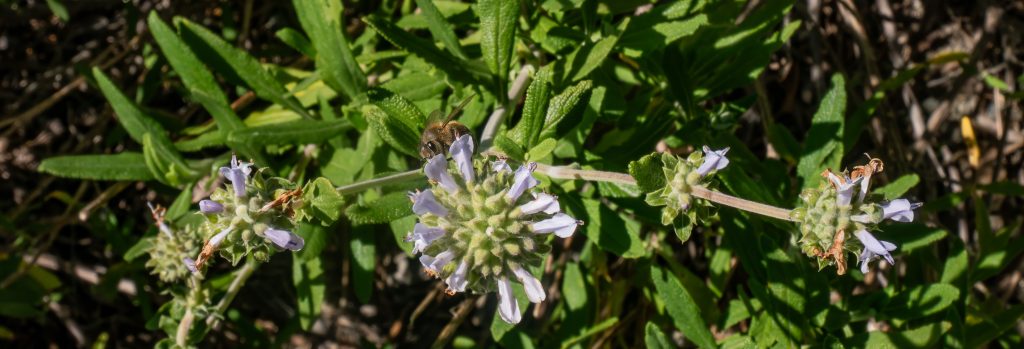
So wrote John Muir in The Mountains of California — a book that inventories the glorious features of the Sierras and the coast ranges, climaxing with a 44-page rhapsody on . . . honey. Perhaps that’s a surprising way to end the book, but if you love our mountains, you’ll especially enjoy this chapter for his narrative of a week spent bushwhacking through the “rigidly inaccessible” chaparral of the San Gabriels, back in August 1877. Along the way, he pauses to praise two special shrubs: White Sage, which we’ll treat separately; and Black Sage, a.k.a. Salvia mellifera.
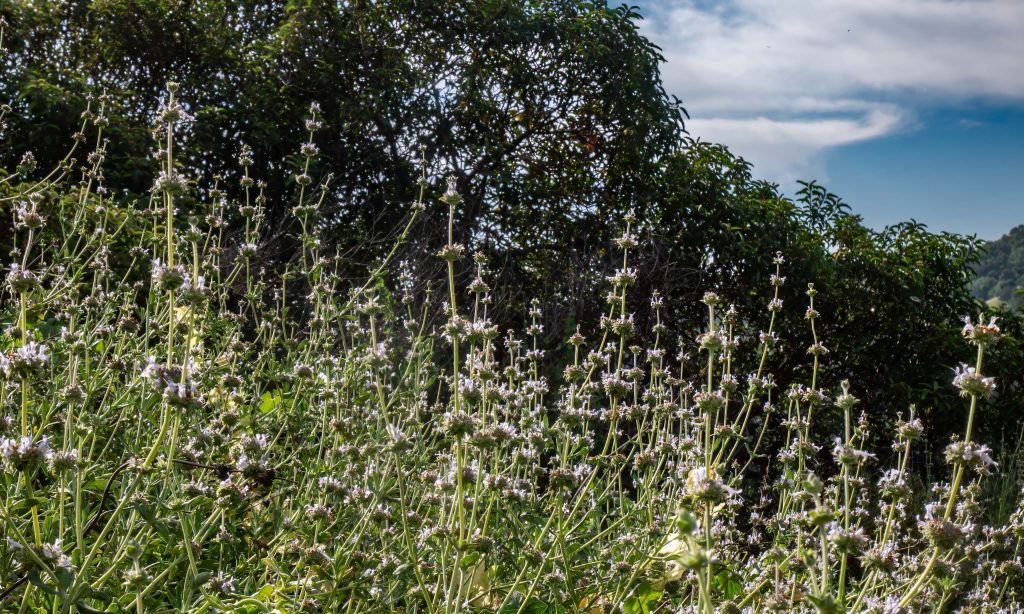
Of course, “Black” Sage isn’t really black. That part of its name probably derives from the blackish appearance of the dried seedhead — a prickly, squashed sphere that has led some to call this species “Black Button Sage.” But the real virtue of the plant is tagged by its Latin name, with salvia loosely meaning “healthful” and mellifera quite precisely meaning “honey-bearing.” (European honeybees share that last moniker, as Apis mellifera, because they “bear” honey, too!)
Black Sage is particularly prized by beekeepers (“honey farmers”), because its honey carries intriguing flavor notes and because it’s especially high in fructose, which makes it resistant to crystalizing. To be sure, as a wild “crop,” Black Sage is also temperamental. It doesn’t produce reliably (weather conditions have to be just right), and that makes its honey even more valuable.
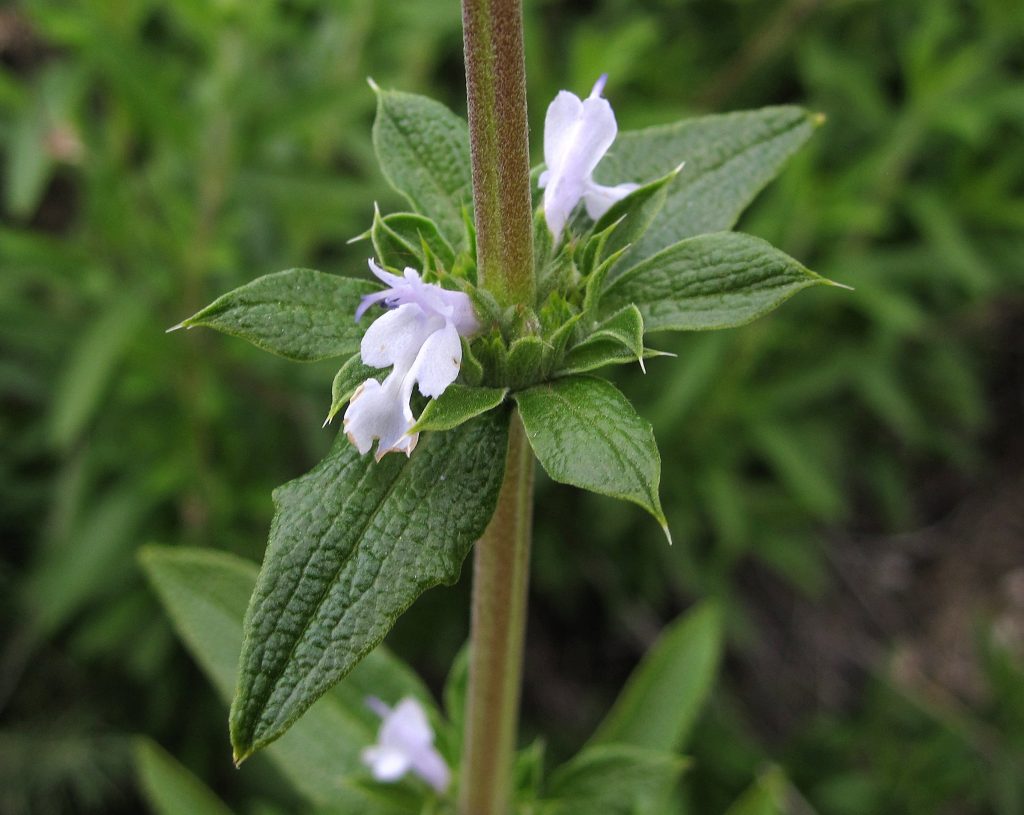
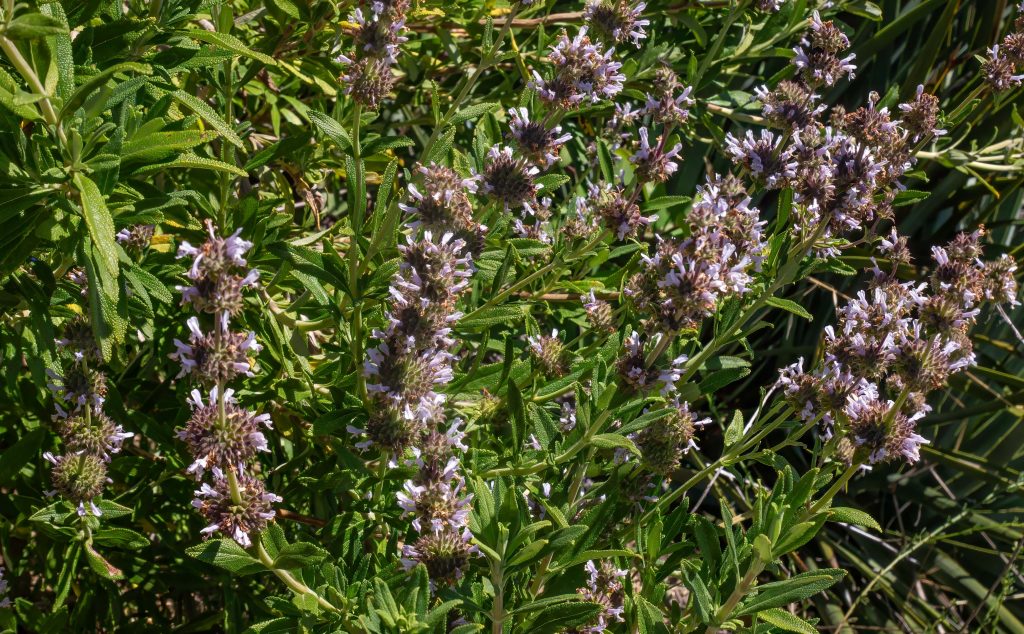
Even if you’re not a bee, or a beekeeper, you will still have no trouble finding Black Sage. It is by far the most widespread of the three native sages commonly seen in our local hills. Its blooming season usually begins before Chia Sage and White Sage, and continues even after those two have finished. Look for a shrub, sometimes quite large, with fairly linear leaves with a pebbly surface. Or look for flower stems that rise well above the leaves and have a succession of orbs or whorls, on which a circle of small, “open-mouthed” flowers range from white to pale blue or lavender. If in doubt, brush your hand against the leaves — the fragrance of this sage is intense and unmistakable!
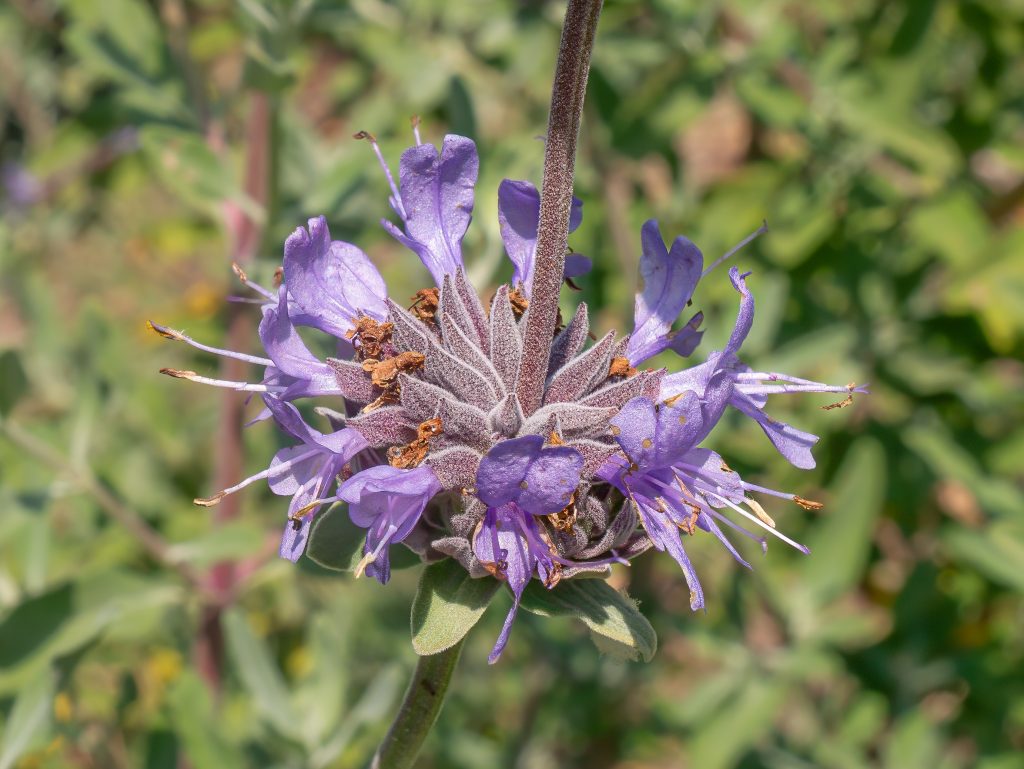
Where and when to find it. Black Sage occurs throughout the coastal ranges of California, from the Bay Area down to Baja. Statewide, it typically blooms from March into July, but in our hills it can be found as early as February. As the dominant sage in Cherry Canyon, it’s found nearly everywhere, but on the flanks of Mt. Lukens it mingles nicely with White Sage.
- For more about Black Sage, visit Wikipedia.
- For information about growing Salvia mellifera in your yard, visit Calscape.org.
- For distribution maps, taxonomy, and more photos, visit Calflora.org.
- Want to read John Muir on honey and the San Gabriels?
- You can also read other wildflower notes, or check out the LCF wildflower directory.
